

#1. The journey begins….again.
Tepid beginnings. Tomatoes, potatoes, and a polytunnel. The discovery of the joys of fermentation. A whine about the state of affairs in food education.
Spring is in full swing. The birds are chirping, the buds are blooming, and the supermarkets are brimming with seeds, potting mix, and slug control products in all formats, shapes and sizes. Allotments and backyards are humming with the noises of digging, hammering and sawing, and whiny lawnmowers. The warmer weather is bringing out the busy bees.
Nope. Let’s try again.
I started this post three months ago when I prematurely expected to receive an allotment from the town council just in time for planting season. Well, that didn’t happen. We are now barging into summer and I have just got the email to tell me I can go take a look at one, after about a year on the list. Yay! But it has given me time to catch up with the countless gardening clips on YouTube and finish the book ‘The Mind-Gut Connection’ - but more of that in another post. 😁
These YouTube gardeners, who impart words of wisdom with a suspicious enthusiasm while stooping uncomfortably next to their luscious and bountiful flowers and disease-free plants, give me the confidence to think I too could produce such a garden. However, I am fully aware that it will take many seasons of trial and error before I come even close.
Meanwhile, I’d like to share my journey in the hope that others can learn from my mistakes, offer their pearls of wisdom, and delve with me into the world of probiotics, fungi, and fermented vegetables - a passion that sprung from my need to find ways to preserve all the tomatoes I unexpectedly grew during the Covid lockdown.
My gardening journey so far.
My journey into gardening began in 2019, a couple of years after we arrived in the UK and found a terrace house with a small backyard. After living in a flat in Madrid for 20 years, I was terribly excited to embark on the magical world of Growing-Your-Own-Food.
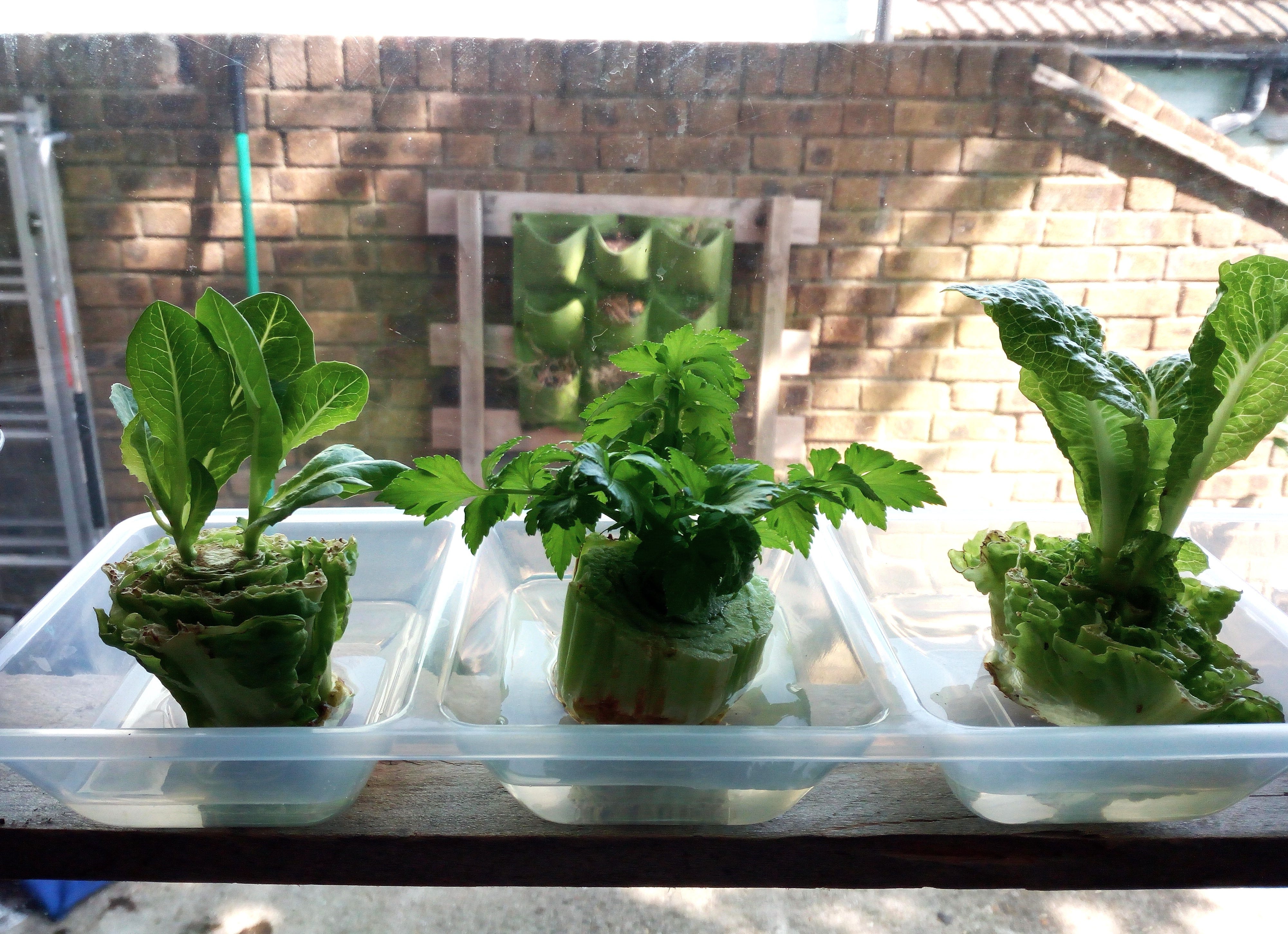
The first year, I started tepidly by re-growing vegetable cut-offs in shallow bowls of water – a little trick I’d seen on social media which blew me away mildly – and setting up a compost bucket for the organic scraps. The second year, I decided to experiment a little further by planting a few tomato seeds.
Encouraged and excited to find they actually produced tomatoes, by the third year I even went so far as to ambitiously construct a polytunnel out of scrap pieces of wood – of which I was excessively proud and had great expectations. The polytunnel lasted one season before strong winds and hailstones tore it apart, but it was a fine thing to behold while it lasted.


By the end of the third year, I had more tomatoes than I knew what to do with, a bagful of potatoes, a steady supply of small green beans, one thimble-sized capsicum, a few heads of slug-nibbled lettuce, as well as an unruly blackberry bush that gave up small but sweet blackberries every summer. Oh, and a strong animosity towards snails.
I was a gardener!! 😌


The eternal battle with slugs and snails.
Never before had I known that so many of these slimy bastards could exist in one place. The torment they inflict on the gardener justifies (in my opinion) a less than humane way of disposing of them, yet I was only able to go so far as to drown them in beer, which is a pretty good way to go, to be fair. The others were tossed over the garden wall into the narrow walkway or into the neighbour’s abandoned garden where they were free to inform their gastropodal friends about the all-you-can-eat salad buffet and free beer on the other side of the fence.


When we left the terrace house (my son to university and me to a small flat near Bath), I sold or donated all my gardening tools and pots thinking I would never need them again. Silly me.
And so the journey begins…..again.
Why grow food?
It seems a lot of time and effort is invested in creating a product that can be consumed within minutes. Why do we do it when the supermarkets are filled with produce from all over the world?
Because supermarkets are filled with produce from all over the world, did you say? Yes.
The wide variety of produce we can buy these days comes at a price. In order for fresh food to travel such long distances, it is picked too early, often relies on chemicals for preservation, is packaged in copious amounts of plastic, and the energy required in its transportation adds to the increasing amount of carbon emissions in the environment.
Buying from local farms or growing our own food can help cut down on our dependence on the massive corporate farms that are starving the world’s soils of nutrients, and reduce the quantity of wasted food that is being thrown into landfills.
So yeah, this blog is not going to be just finding out what to plant, why and when, but also to explore how we can do our bit to create regenerative, sustainable, and healthier practices.
If I can learn, then anyone can!
Another long-held interest of mine revolves around the stunning fact that so many kids don’t know where their food comes from, or how important it is for our mental and physical health. And neither do their parents.
As someone who’s had their toes dipped in the education system for many years, it boils my butter that most schools are still not teaching kids how to grow food, cook food, and understand gut health - after all we now know about it! Child obesity, diabetes, and the strain on the National Health Service should be reason enough to make this a compulsory school subject.
Some of things I expect to cover here are:
Growing vegetables and fruits organically.
Creating delicious, healthy, and easy to prepare recipes.
Exploring ways we can educate children and the wider public on the importance of good food.
Understanding gut flora and its affects on our mental and physical health..
Delving into the world of fermentation and other probiotics.
Finding more effective and harmless remedies against pests and diseases.
Discussing the increasing interest in sustainable agricultural practices, such as regenerative farming, permaculture, no-till farming, urban farming and rooftop gardens.
Investigating soil from its microbial diversity and nutrient content, to the mycorrhizal fungi and symbiotic relationships between soil fauna, plants and fungi.
Hopefully I’m not biting off more than I can chew because there’s so much to learn about these fascinating subjects. And I am somewhat known for abandoning some of my passionate interests in the past. 🙄 But this one has been nagging at me for a long time and I am enthusiastic to learn what is being done by farmers, scientists, researchers, and the average plot guru around the world to bring some optimism to an otherwise depressing prognostic.
I hope you will join me.


